The short answer
Aluminium bifolds are usually worth the extra over uPVC when you want slim frames, large panes and long-term durability on a prominent opening — but uPVC can be the smarter buy on a budget or a less visible elevation. The premium pays for aluminium's strength: it makes far slimmer frames possible, carries bigger panes over wider openings, and gives a crisp, modern look with more glass and light. It is also extremely durable, corrosion-resistant and low-maintenance, with a wide choice of powder-coated colours. uPVC costs less and insulates well, but frames are bulkier, panel and opening sizes are more limited, and the look is plainer. If sightlines, span and longevity matter, aluminium justifies the cost; if budget rules and the opening is modest, uPVC may be enough.
Aluminium typically costs more than uPVC, so the question is whether the extra is justified. The sections below set out exactly what the premium buys, and the cases where a uPVC bifold is the more sensible choice.
What the premium buys
- FramesMuch slimmer than uPVC
- Panes/spanLarger panes, wider openings
- DurabilityCorrosion-resistant, stable
- MaintenanceLow for both
- When uPVC is enoughBudget, modest opening
What you get for the extra
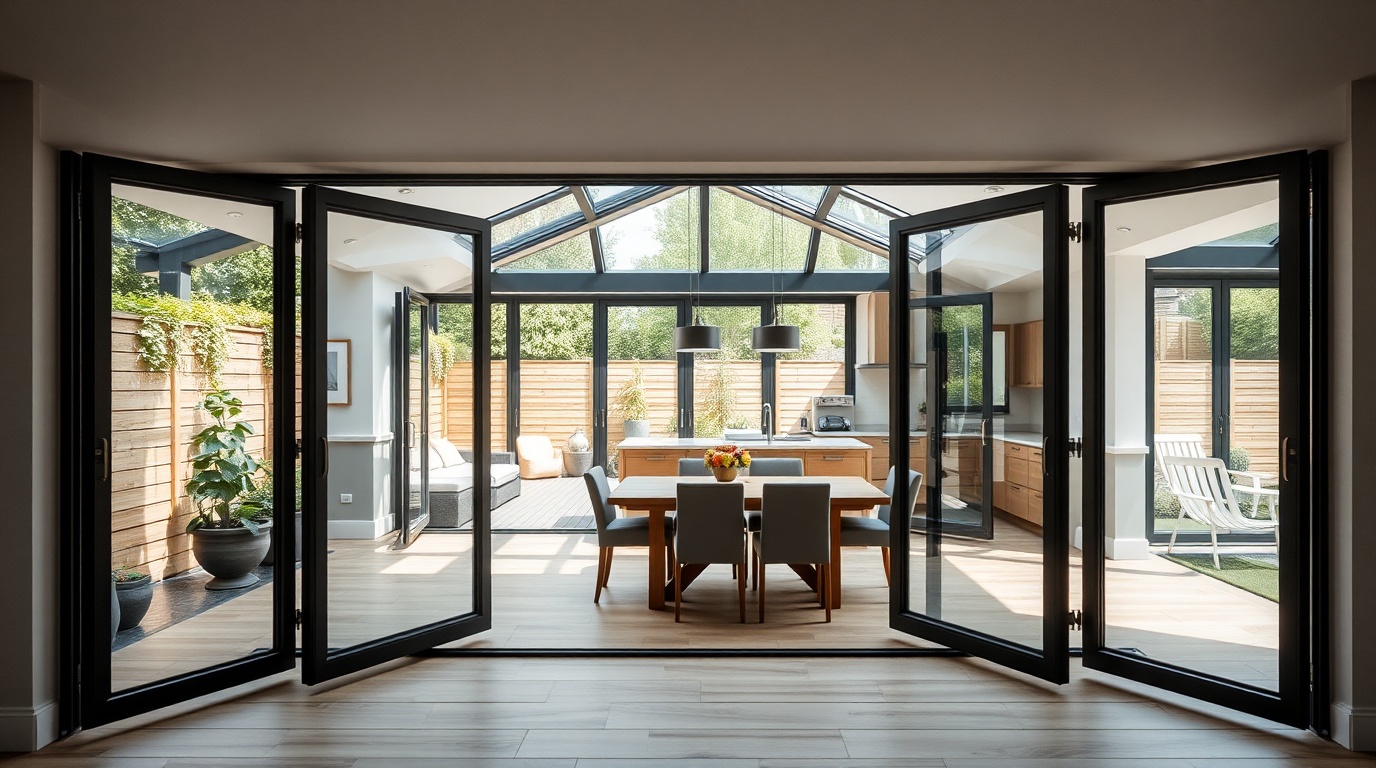
The premium for aluminium is not arbitrary — it buys specific, tangible advantages that come from the metal's strength. The headline is slim frames: because aluminium is strong, the frame and panel stiles can be thin while still holding large panes safely, so you get more glass, more daylight and a sharper, more modern look than bulkier uPVC allows. On a feature opening where the doors are the focal point, that difference is very visible.
| Benefit | Aluminium | uPVC |
|---|---|---|
| Frame sightlines | Slim | Bulky |
| Maximum pane / opening size | Large | More limited |
| Look | Crisp, modern | Plainer |
| Durability / stability | Excellent | Good |
| Colour options | Wide RAL range, dual-colour | Fewer, foils |
| Cost | Higher | Lower |
Indicative comparison for guidance; differences vary by system and size.
Durability, span and longevity
Beyond looks, aluminium buys strength and stability. It does not warp, swell or distort with temperature and humidity the way some materials can, and it resists corrosion, so frames stay true and operate smoothly over a long life. That strength also allows larger panes and wider openings — useful for a big extension where you want few, large panels rather than many smaller ones. uPVC, being a softer material, often needs reinforcement and still cannot match aluminium's span or pane size, so very wide or tall configurations may not be possible in uPVC at all.
On maintenance, both are low — neither needs painting and both clean up easily — so this is not a strong point of difference. The powder-coated finish on quality aluminium is durable and stable, available in a wide range of RAL colours and dual-colour options (different shades inside and out), which gives more design freedom than uPVC's narrower palette and woodgrain foils. For a door you expect to keep and use for decades on a prominent opening, aluminium's durability and looks are usually what justify the premium.
When uPVC is the smarter choice
Aluminium is not automatically the right answer. There are clear cases where uPVC is the better buy. The most obvious is budget: uPVC is meaningfully cheaper, so if the spend is tight, the money saved can go toward better glazing, flooring or the wider project. The second is a less prominent opening — a rear or side elevation that is not a focal point, where the slimmer frames and large panes of aluminium add less and a cost-effective uPVC bifold does the job.
uPVC also insulates well thanks to its multi-chamber frames, so on thermal performance it is not far behind a thermally broken aluminium door; for a modest opening, the comfort difference is small. The honest summary is that aluminium is worth the extra when sightlines, span and long-term looks matter — typically on a wide, visible, feature opening — and uPVC is the smarter choice when budget is the priority, the opening is modest, or the doors are not a focal point. Both, properly specified and fitted, give a sound, functional bifold; the premium is about how much the aluminium-specific benefits are worth to you.
Frequently asked questions
Why are aluminium bifolds more expensive than uPVC?
Aluminium is a stronger, more precisely engineered material, which allows slim frames, large panes and wide openings, plus durable powder-coated finishes. Those advantages and the manufacturing cost behind them are what you pay the premium for over a bulkier, lower-cost uPVC frame.
Is a uPVC bifold good enough for most homes?
For modest openings on less prominent elevations, and where budget matters, a quality uPVC bifold is perfectly good — it insulates well and is low-maintenance. Aluminium becomes worth the extra mainly on wide, visible feature openings where slim frames and large panes make a real difference.
Do aluminium bifolds last longer than uPVC?
Aluminium is extremely stable and corrosion-resistant and tends to keep operating smoothly over a long life without warping. uPVC also lasts decades but can discolour or date over a very long life and may need reinforcement on larger sizes. For longevity on a big opening, aluminium has the edge.
Sources & further reading
Figures on this page are typical UK ranges drawn from published sources and depend on your specific opening and material. They are guidance, not a quotation.