The short answer
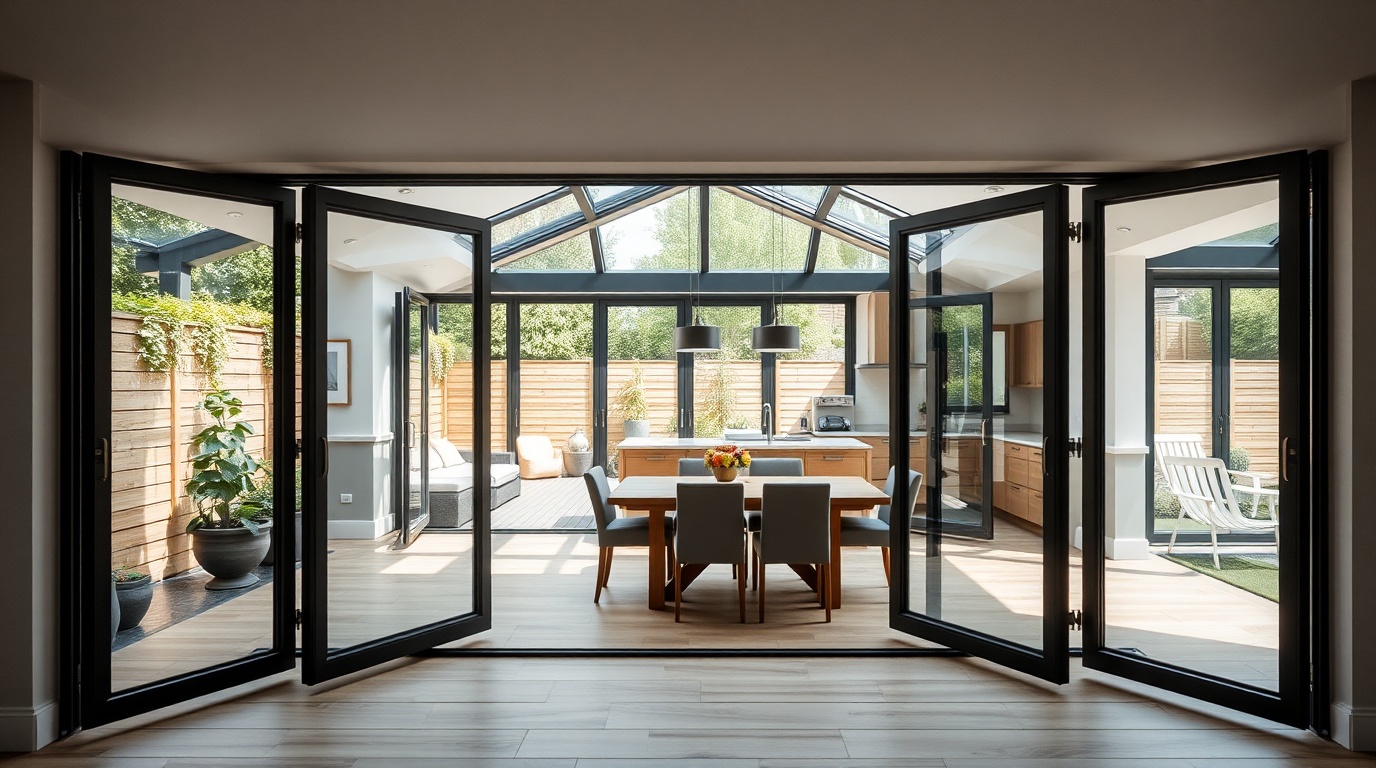
There is no single winner — it depends on how the door will be used. Bifolds fold back to open up to around 90% of the aperture, making them ideal where you want to throw the whole wall open onto a garden in summer. Sliding doors keep at least one fixed panel, so they open roughly half the width, but they have far slimmer sightlines — interlocks engineered as narrow as 20–35mm versus a bifold's frame every metre or so — which gives a cleaner view when the door is closed for much of the year. On cost, both sit in a similar bracket: a quality 3–4m aluminium bifold runs roughly £5,500–£7,500 fitted, while aluminium sliders run roughly £4,000–£8,500 fitted, with premium lift-and-slide systems higher. The right answer turns on whether you value the wide-open summer aperture or the uninterrupted year-round view.
The choice is really a trade-off between how wide the door opens and how clear the view is when it is shut. Here is how bifolds and sliders compare on the things that matter.
At a glance
- Bifold openingup to ~90% of aperture
- Sliding opening~half the width
- Bifold sightlinesframe every ~1m
- Slider sightlinesas slim as 20–35mm
- Both, 3–4m fittedroughly £4k–£8.5k
How they compare
Bifolds fold concertina-style to one or both sides, clearing most of the opening — the right call if you regularly want the whole wall open onto a patio. The trade-off is more visible frame: a three-leaf bifold shows two vertical sections when closed, where a slider of the same width often shows just one slim interlock. Sliding doors glide on a track with at least one fixed pane, so they open about half the span, but their slim sightlines and large glass area give a better view and more light through the months the door stays shut. Many homeowners are surprised that sliders are not automatically cheaper — on larger spans they can cost more than an equivalent bifold.
| Feature | Bifold | Sliding |
|---|---|---|
| Opening | up to ~90% of aperture | ~half the width |
| View when closed | frame every ~1m | slim interlock, big glass |
| Sightlines | ~132mm typical | as slim as 20–35mm |
| Typical 3–4m fitted | ~£5,500–£7,500 | ~£4,000–£8,500 |
General comparison for guidance; figures depend on span, material and spec. Sources: trade comparison guides.
How to choose for your home
- Door open most of the summer? A bifold's near-full opening suits indoor-outdoor living.
- Door closed most of the year? A slider's slim sightlines give a clearer, lighter view through autumn, winter and spring.
- Want maximum glass and minimum frame? Sliders generally win on uninterrupted view.
- Budget-led? A uPVC or smaller aluminium bifold is often the lower-priced route, but price the same span both ways before deciding.
Frequently asked questions
Are bifold or sliding doors better?
It depends on use. Bifolds open up to around 90% of the aperture, ideal for throwing the wall open in summer, while sliding doors keep a fixed panel but have far slimmer sightlines for a clearer view when closed most of the year.
Are sliding doors more expensive than bifolds?
Not always, but often on larger spans. A 3–4m aluminium bifold runs roughly £5,500–£7,500 fitted, while aluminium sliders run roughly £4,000–£8,500 fitted, with premium lift-and-slide systems higher again.
Which lets in more light, bifold or sliding?
When closed, sliding doors generally let in more light because their slim interlocks and large glass panes show less frame than a bifold, which has a vertical section every metre or so.
Sources & further reading
Figures on this page are typical UK ranges drawn from published sources and depend on your specific opening and material. They are guidance, not a quotation.