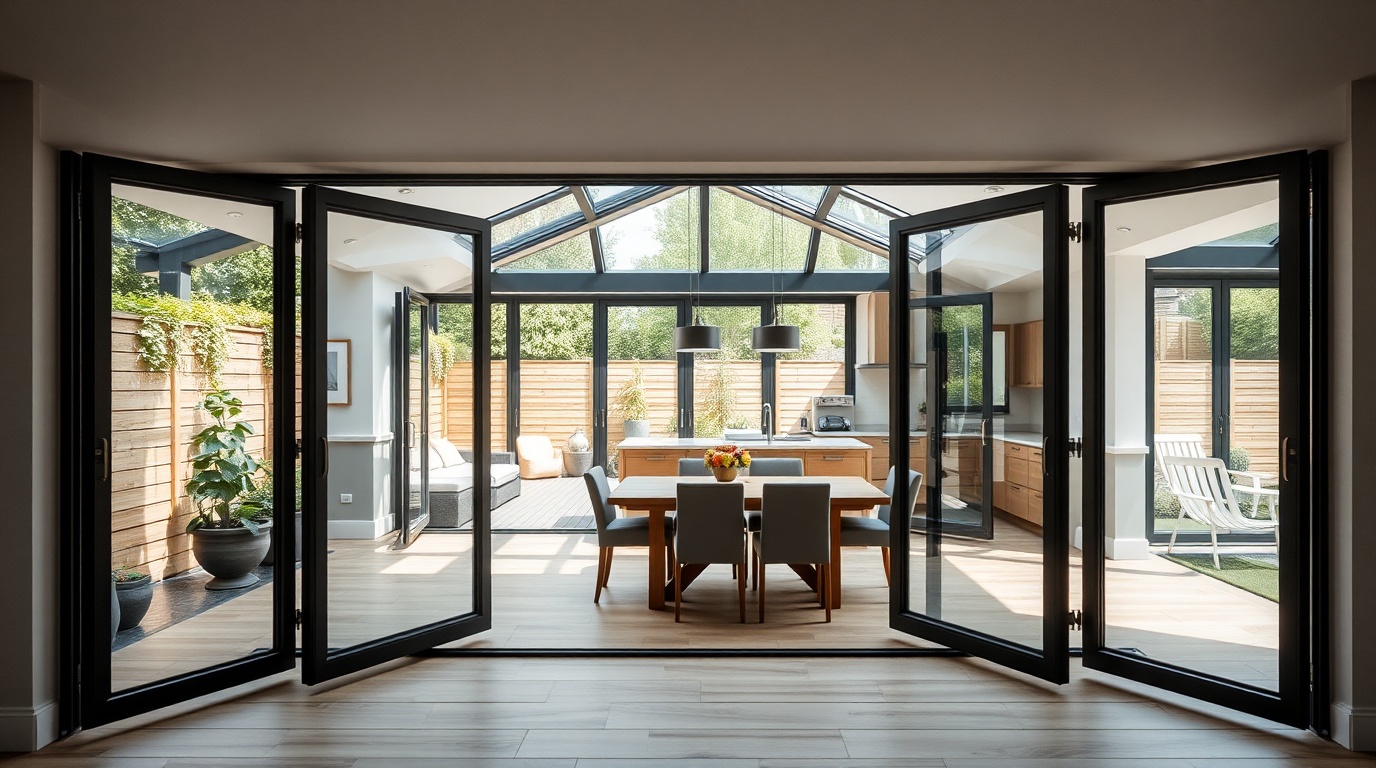
The short answer
Bifold doors for a kitchen extension in the UK typically cost between £4,000 and £9,000 fitted, because extension rear walls usually call for wide four to six-pane runs of three to five metres. The door set itself is often £3,000 to £6,500, with fitting and glazing upgrades on top. In an extension the structural opening, steel beam and brickwork are usually part of the builder's quote rather than the door installer's, so the door price you compare should be just the supply and fit of the bifold. Larger spans, triple glazing, low thresholds and premium colours all push the figure towards the upper end.
Extension bifolds are usually wide, so they sit at the larger end of the price range, and the structural opening is normally in the builder's scope.
Quick reference
- Typical span3.0–5.0m
- Door set (4-6 pane)£3,000–£6,500
- Fitted (door only)£4,000–£9,000
- Steel beam (in builder's quote)£1,500–£4,000+
Bifold cost by extension span
Kitchen extensions usually open the whole rear wall to the garden, so the bifold is wide. The table shows indicative UK 2026 fitted figures for the door element, assuming the structural opening is formed by the builder. The wider the span, the more panels and stronger frames are needed, which lifts the cost.
A four-pane run across three metres sits at the lower end, while a six-pane run beyond five metres reaches the top. Glazing upgrades such as solar-control glass for a sunny rear wall, and a flush threshold for a seamless link to the patio, add to these figures.
| Span | Panels | Door set | Fitted (door only) |
|---|---|---|---|
| 3.0m | 4-pane | £2,800–£4,800 | £4,000–£6,500 |
| 4.0m | 5-pane | £3,500–£5,800 | £4,800–£8,000 |
| 5.0m+ | 6-pane | £4,200–£6,500+ | £5,500–£9,000+ |
Indicative UK figures for the door only; structural and groundwork sit in the wider extension budget.
What sits in the builder's quote, not the door's
For an extension, several big-ticket items belong to the main build rather than the door supplier, which is why the door price alone looks modest against the project total:
- Structural steel beam or lintel across the opening, designed by an engineer.
- Foundations, walls and roof of the extension itself.
- Internal floor screed and levels to meet the door threshold.
- Building control sign-off for the structure, separate from the door's glazing compliance.
When comparing door quotes, make sure each covers the same scope, ideally supply and fit of the bifold into a prepared opening with making good around the reveals. A door quote that looks cheaper may simply exclude work that another includes, so itemised quotes are essential for a fair comparison.
Specification choices that affect price
Several specification decisions move the bifold cost within the ranges above. A low or flush threshold gives a seamless link from kitchen to patio but costs more and needs careful weather detailing. Triple glazing and solar-control glass improve comfort in a glazed rear wall but add to the price; for a kitchen that faces strong afternoon sun, solar-control glazing is worth considering to limit overheating.
Wider spans need stronger frames and more panels, and the panel split affects how the doors stack and whether you can include a traffic door for everyday access. Non-standard or dual colours, premium handles and integrated blinds within the glass all add cost. Because the rear wall is so glazed, getting the glazing specification right matters more here than on a small replacement, both for comfort and for the heat-loss performance the room will have year-round.
Fitting the door cost into the project
In a kitchen extension budget, the bifold is usually a single line among many: groundwork, walls, roof, the kitchen itself, electrics, plumbing and finishes. Treating the door as a known, fixed figure helps keep the wider budget under control. Agree early whether the bifold is in the builder's price or bought separately, and make sure the opening dimensions are coordinated so the made-to-measure door fits the finished structure.
Timing matters too. The bifold has a lead time of several weeks, so it must be ordered once the opening size is confirmed but well before the building work reaches the point of needing it fitted. A flush threshold needs the internal floor level set to suit, so the screed and the door specification have to be coordinated. Building in a small contingency for the door element covers any change in glazing or threshold decided once the space takes shape, which is common as homeowners see the room and the view emerge.
It is worth remembering that the bifold is the part of the extension you interact with every day, so spending a little more on the door rather than trimming it to hit a number often pays off. The glazing specification governs how warm and comfortable the new room is, the threshold detail decides how seamlessly the kitchen flows to the patio, and the panel split sets how easily you move in and out. Cutting the door budget to fund finishes elsewhere can leave the most-used element underspecified. A sensible approach is to fix a realistic door figure within the wider build cost, choose the glazing and threshold for comfort and use rather than headline price, and treat the structural opening as the builder's separate line. That keeps the project budget honest while making sure the doors, which define the whole feel of the extension, are right for the way the room will be lived in.
Frequently asked questions
Should the bifold be in the builder's quote or separate?
Either works, but be clear which. Many builders include the structural opening and let you choose the door separately, while some offer a turnkey price. The key is that every quote covers the same scope so you compare fairly.
How wide can the bifold be for an extension?
Bifolds can span several metres across multiple panels, comfortably covering a typical extension rear wall. Very wide runs use more panels and stronger frames, which increases cost and means choosing the panel split carefully.
Do extension bifolds need building regulations?
Yes. The structural opening and the new glazing both fall under Building Regulations. The structure is signed off through building control, while a registered installer can self-certify the door's glazing standards.
Is solar-control glass worth it on a kitchen extension?
If the rear wall faces strong sun, solar-control glass can reduce summer overheating and glare, making the room more comfortable. It costs more than standard glazing but is often worthwhile on a large glazed elevation.
When should I order the bifold during an extension build?
Order it once the opening size is confirmed but with enough lead time, usually several weeks, so it arrives when the structure is ready. Coordinating the threshold with the floor levels avoids problems at fitting.
Sources & further reading
- Checkatrade — bifold door cost guide
- Checkatrade — single-storey extension cost guide
- HomeOwners Alliance — bifold doors guide
Figures on this page are typical UK ranges drawn from published sources and depend on your specific opening and material. They are guidance, not a quotation.