The short answer
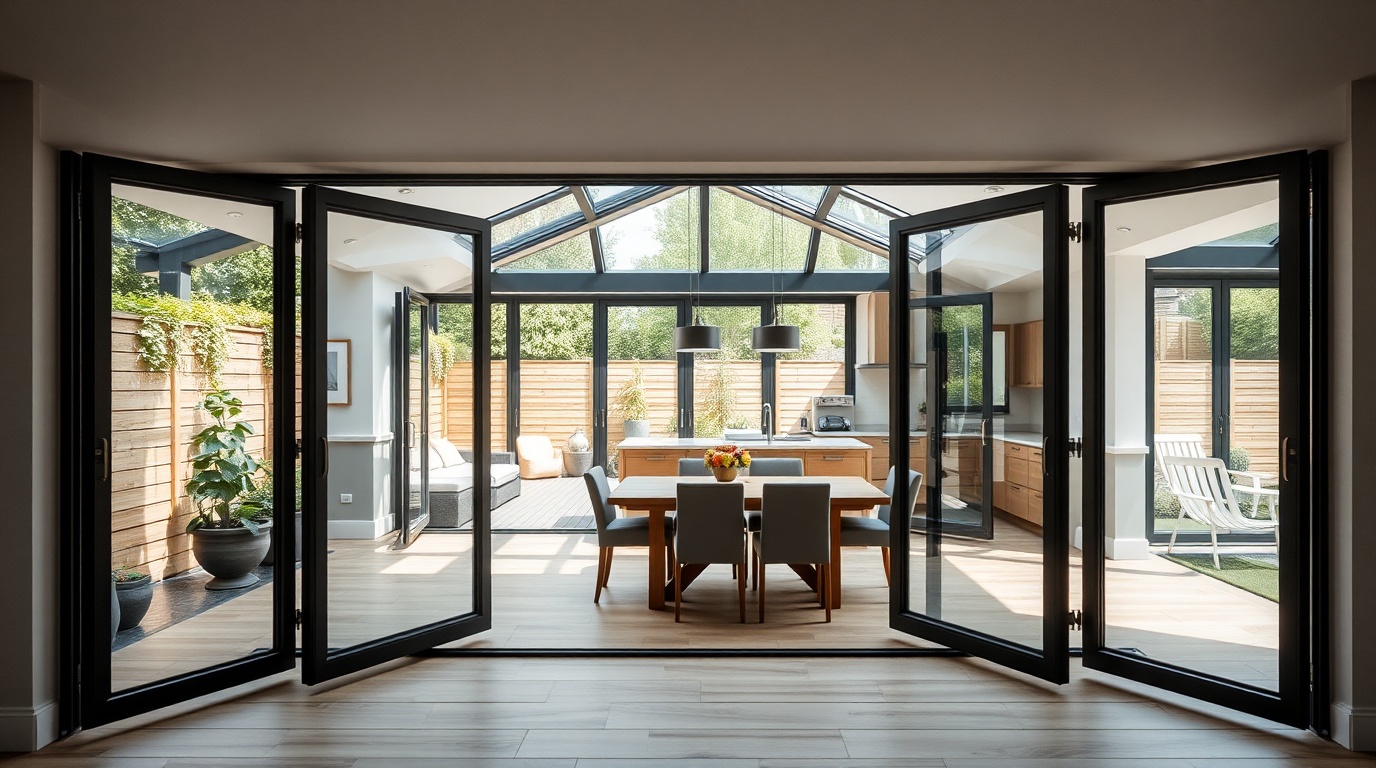
Bifold doors' main pros are a very wide opening, lots of natural light and a strong indoor-outdoor feel; the main cons are higher cost, more visible frame when closed, and more parts to maintain. On the plus side, a multi-panel set folds back to clear up to about 90% of a wide opening, floods a room with daylight, and adds a desirable lifestyle feature. On the downside, bifolds cost more per metre than French or sliding doors, show a vertical stile on every panel so the closed view has more frame than a slider, and have multiple hinges, rollers and a track that need periodic cleaning and adjustment. A large glass area can also gain heat in summer and lose it in winter unless glazing is well specified. Weighing these honestly is the key to a good decision.
Every door type involves trade-offs. The sections below lay out the genuine advantages and drawbacks of bifold doors so you can judge whether the upsides matter to you and the downsides are ones you can live with.
Bifold doors in brief
- Biggest proOpens up to ~90% of a wide wall
- LightLarge glazed area
- Biggest conHigher cost than alternatives
- Frame when closedMore than a slider
- MaintenanceMultiple moving parts
The pros
The strongest case for bifolds is the opening. Nothing else folds an entire wall of glass aside the way a multi-panel bifold does, so a kitchen-diner can open completely onto a patio in summer. That brings a genuine indoor-outdoor feel that homeowners value highly.
- Wide, near-full opening — a four- or five-panel set clears up to about 90% of the opening.
- Lots of daylight — a large glazed run brightens a room even when the doors are closed.
- Flexible everyday use — most sets include a single 'traffic door' you can open without folding the whole run back.
- Lifestyle appeal — a desirable feature that supports a home's saleability, especially in open-plan extensions.
- Durable options — quality aluminium systems are strong, slim and low-maintenance over their life.
The cons
Set against those benefits are real drawbacks worth weighing before you commit.
- Higher cost — bifolds cost more per metre than French or sliding doors, and a wide aluminium set can run well into five figures fitted.
- More frame when closed — every panel has a vertical stile, so a wide run shows several uprights across the glass; a slider gives a cleaner view.
- More to maintain — multiple hinges, rollers and a track mean more components to keep clean and adjusted.
- Heat gain and loss — a big glass area can overheat in summer and lose warmth in winter unless solar-control or high-performance glazing is specified.
- Stacking space — folded panels need somewhere to sit, usually projecting slightly into the room or against the reveal.
- Cleaning — more panels and frames mean more glass edges and tracks to clean than a simple French door.
| Aspect | Pro or con | Notes |
|---|---|---|
| Opening width | Pro | Up to ~90% clear |
| Daylight | Pro | Large glazed area |
| Cost | Con | Higher per metre |
| Frame when closed | Con | One stile per panel |
| Maintenance | Con | Hinges, rollers, track |
| Heat performance | Depends | Good with the right glazing |
Indicative summary for guidance; the balance depends on your opening and glazing.
How to weigh them up
The pros and cons point to a simple test: bifolds are a strong choice where the opening is wide and you will genuinely use it open, and a weaker choice where the opening is narrow or the doors will mostly stay shut. If the wide opening and indoor-outdoor feel are what you want, the cost and maintenance are usually a fair trade. If you mainly want light and a view, a French door or slider may give you the parts you value without the parts you do not.
It also helps to address the cons at the design stage rather than after. Specify solar-control glazing to limit summer overheating, choose a quality system with serviceable hardware to keep maintenance manageable, and plan where the folded stack will sit. Doing that turns most of the downsides into manageable details rather than regrets, and lets the genuine advantages — the opening, the light and the feel — come through.
Frequently asked questions
What is the main disadvantage of bifold doors?
The most cited drawbacks are higher cost than French or sliding doors and more visible frame when closed, because every panel has a vertical stile. They also have more moving parts to maintain. Most of the heat-related concerns can be designed out with good glazing.
Do bifold doors lose a lot of heat?
A large glazed area can lose heat in winter and gain it in summer, but modern bifolds with high-performance double or triple glazing and good frames perform well. Specifying solar-control glass limits summer overheating, so heat loss is more about the glazing choice than the door type.
Are bifold doors hard to maintain?
They need a little more upkeep than a French door because of the hinges, rollers and track, but it is straightforward — mainly keeping the track clear of grit, cleaning the glass and frames, and occasional hardware adjustment. Quality systems with serviceable parts make this easier.
Sources & further reading
Figures on this page are typical UK ranges drawn from published sources and depend on your specific opening and material. They are guidance, not a quotation.