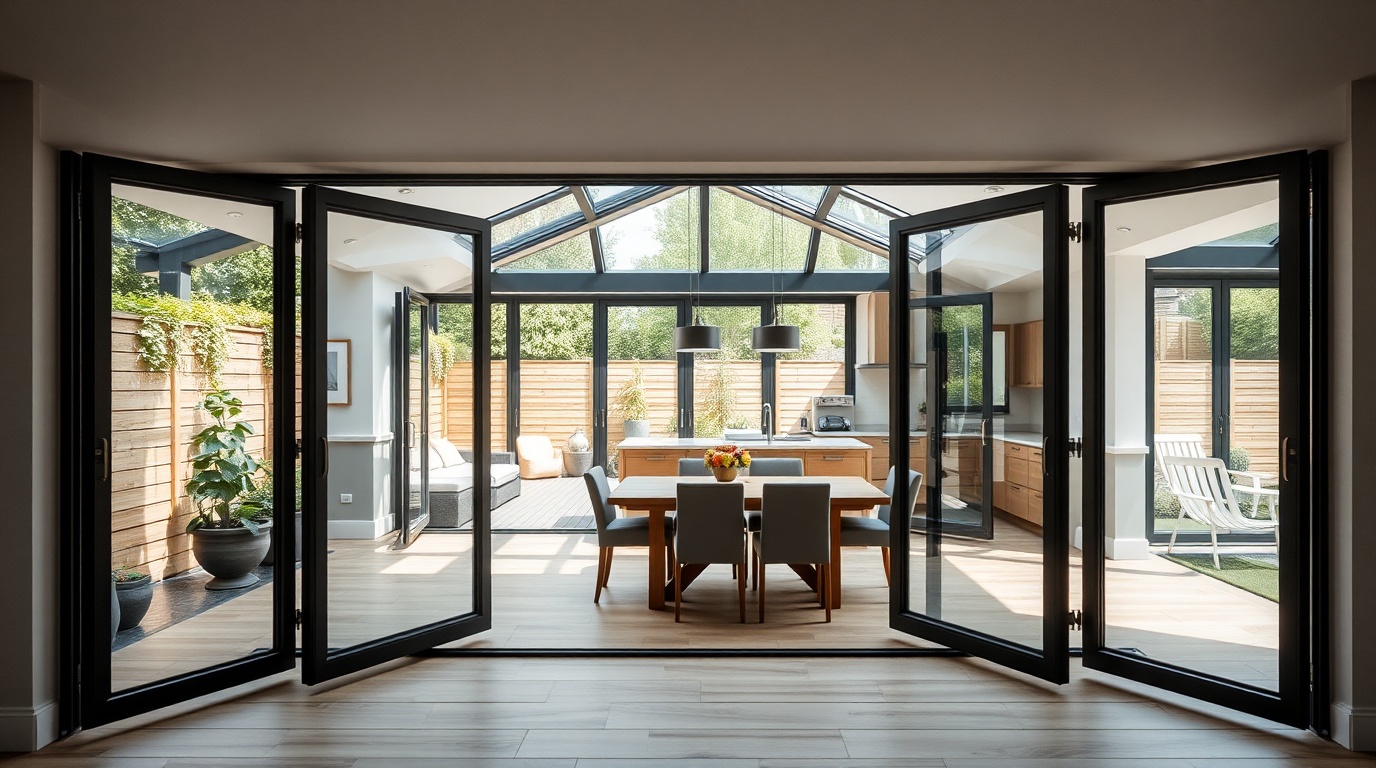
The short answer
Yes, bifold doors are usually more expensive than French doors of a similar width, though the gap narrows at larger sizes. A pair of French doors in the UK typically costs from around £700 to £2,500 supply-only, while a comparable bifold set runs from roughly £1,200 to £4,000. French doors are simpler, with two hinged leaves and a single set of hinges, whereas a bifold has multiple panels, more hinges, rollers and a sliding-folding track. The trade-off is that bifolds open up a much wider span and fold almost fully clear, so the higher price buys a different result rather than a like-for-like product.
French doors and bifolds serve different purposes, so a price comparison only makes sense once you fix the opening width you want to fill.
Quick reference
- French doors (supply-only)£700–£2,500
- Bifold doors (supply-only)£1,200–£4,000
- French fitted£1,400–£3,500
- Bifold fitted£2,500–£6,500
Price comparison at typical sizes
The table sets out indicative UK 2026 ranges for both door types at common opening widths, fitted. French doors are usually a pair around 1.2 to 1.8 metres wide, while bifolds scale from two panels up to six. At the narrow end the two overlap; beyond a pair's width, French doors are not practical and bifolds or sliders take over.
The figures assume aluminium frames and standard double glazing. uPVC French doors can be cheaper still, while premium aluminium bifolds with upgraded glazing sit at the top. The key point is that at a given width a bifold tends to cost more, but it also does something a French pair cannot at wider openings.
| Width | French doors (fitted) | Bifold doors (fitted) |
|---|---|---|
| Up to 1.8m | £1,400–£3,000 | £2,200–£4,000 |
| 2.4m | Not typical | £3,000–£5,500 |
| 3.0m+ | Not typical | £4,000–£8,000+ |
Indicative UK figures; French doors are rarely made wider than a pair, so bifolds fill larger openings.
Why bifolds cost more
The price difference comes down to engineering. A bifold has to carry several panels on a precise track and fold them neatly to one or both sides, which requires more hardware and tighter tolerances than a hinged pair. The main reasons bifolds sit higher are:
- More panels and hinges: a three to six-panel set has far more moving parts than two French leaves.
- Sliding-folding track and rollers: the running gear adds cost a hinged door does not have.
- Larger glass area: wider openings mean more glass and stronger frames.
- Lead opening and locking: a traffic door and multipoint locks add complexity.
French doors achieve their lower price through simplicity: two leaves, two sets of hinges and a straightforward multipoint lock. That simplicity also means fewer things to maintain, though it caps how wide the opening can be.
When French doors make more sense
If your opening is around 1.2 to 1.8 metres, French doors are usually a lower-cost, simpler and perfectly adequate choice. They also let you open just one leaf for everyday access without unfolding a whole stack, which suits a back door used many times a day. They are a long-established style that suits period and traditional homes as well as modern ones.
Bifolds come into their own on wider openings of 2.4 metres and up, where French doors are not practical, because they fold almost completely clear and create an uninterrupted threshold to a garden or extension. For a kitchen extension rear wall, bifolds or sliding doors are the usual choice; for a modest patio replacement, French doors often work out cheaper. Deciding the width and how you will use the doors day to day is the quickest way to settle which type fits both the opening and the budget.
Total cost beyond the door
The door price is only part of the picture. Replacing existing French doors with a same-width bifold means little structural work, so the cost difference is mostly the door itself. But going wider, from a French pair to a three-metre bifold, means enlarging the opening with a new lintel or steel beam, structural calculations and extra making good. That building work can add more than the price gap between the two door types, so the real comparison is the whole project, not just the door.
Other shared costs include removal and disposal of the old doors, the threshold type you choose, and any glazing upgrades. A registered installer can self-certify either door type for Building Regulations glazing standards through a scheme such as FENSA, avoiding a separate building control fee. When weighing French doors against bifolds, price the complete job for each, including any structural change, so the comparison reflects what you will actually pay.
It also helps to picture how each door will be used over the years, not just what it costs to fit. A French pair that is opened a few times a day for garden access wears differently from a wide bifold that is thrown fully open on warm weekends and used through its traffic door the rest of the time. French doors have fewer moving parts to adjust, while a bifold's track and rollers reward occasional cleaning and lubrication to keep the fold smooth. Neither is demanding, but the simpler French door suits a busy everyday back door, and the bifold rewards an opening where the wide-open feel is the whole point. Setting the long-term use alongside the complete fitted price, rather than comparing bare door costs, is the most reliable way to judge which door is worth it for your home.
Frequently asked questions
Do bifold doors add more value than French doors?
Both can improve a home, but bifolds tend to make a stronger visual impact on wide rear openings and extensions. Value depends on the property and how well the doors suit the space rather than the door type alone.
Are French doors more secure than bifolds?
Both can be highly secure when fitted with quality multipoint locks and toughened glazing. Security depends on the lock specification and installation rather than the door style.
Can I replace French doors with bifolds?
Yes, but a wider bifold usually needs the opening enlarged, which means a new lintel and structural work. Replacing French doors with a same-width bifold is simpler but loses some of the bifold's wide-opening appeal.
Which is cheaper to maintain, French or bifold?
French doors have fewer moving parts, so there is less to adjust over time. Bifolds need their track kept clean and rollers lubricated. Both are low-maintenance with basic care.
Are uPVC French doors much cheaper than aluminium bifolds?
Yes, uPVC French doors are usually the lower-cost option for a narrow opening. The saving reflects simpler construction and a smaller span, not a like-for-like comparison with a wide bifold.
Sources & further reading
- Checkatrade — bifold door cost guide
- Checkatrade — French door cost guide
- HomeOwners Alliance — bifold doors guide
Figures on this page are typical UK ranges drawn from published sources and depend on your specific opening and material. They are guidance, not a quotation.