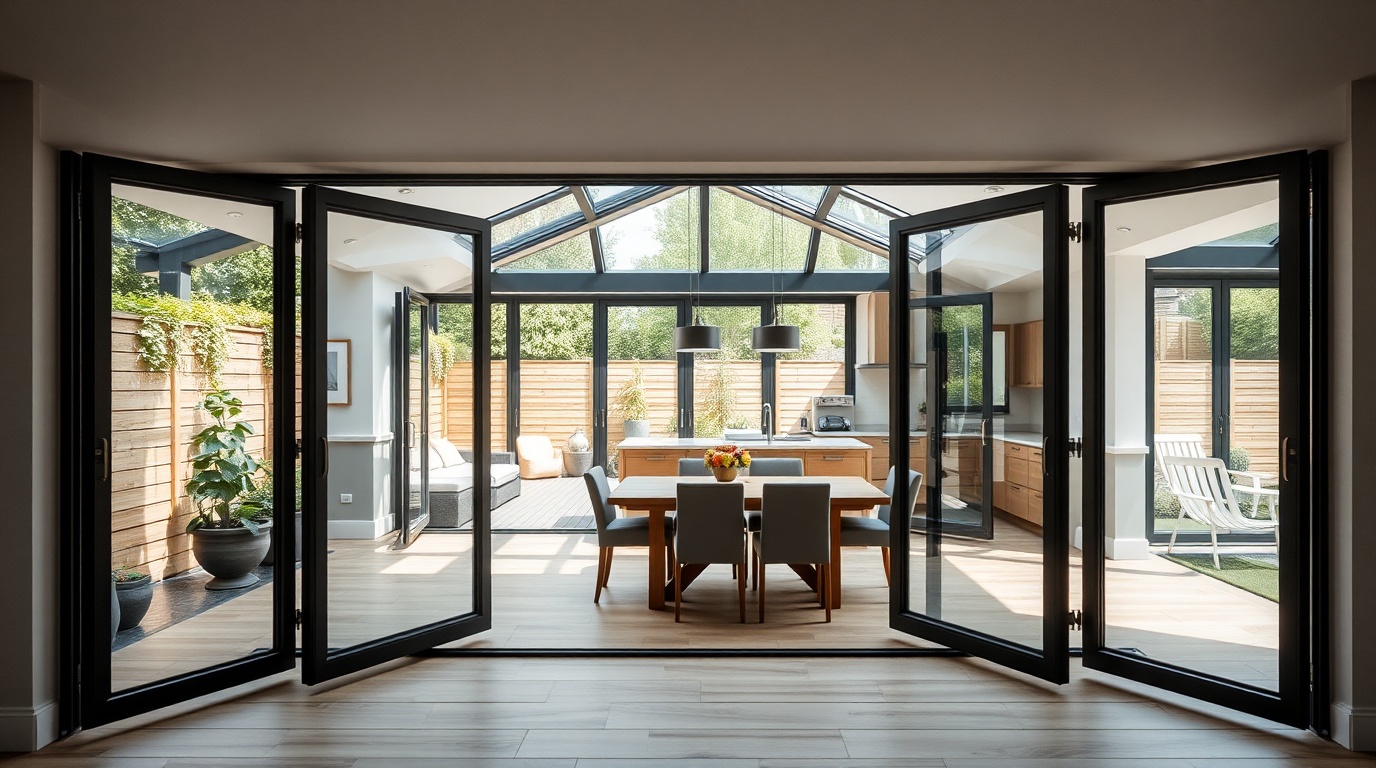
The short answer
Bifolds open almost the whole wall away but show more frame when closed; sliding patio doors give a near-uninterrupted view but only part of the opening ever clears. A bifold concertinas its panels to one or both sides, so on a sunny day you can fold back up to about 90% of the opening. A large sliding door (often called a slider or lift-and-slide) glides one pane behind another, so the most you can open is usually half the width — but because the panes are big and frames slim, the glazed view when closed is far cleaner. Bifolds suit people who want to throw the wall open for entertaining; sliders suit those who value the view and a flush, low-maintenance run of glass. Both can be specified with low thresholds and high security.
Bifold and sliding patio doors are the two main ways to open a wide opening onto a garden in UK homes. They behave very differently, so the right choice depends on whether you value maximum opening or the cleanest possible view.
Bifold vs slider at a glance
- Bifold openingUp to ~90% of width
- Slider openingUsually up to ~50%
- View when closedSlider cleaner; bifold more frame
- Pane sizeSlider larger panes
- StackingBifold folds aside; slider slides behind
Pros and cons side by side
Bifolds and sliders are not better or worse than each other — they make opposite trade-offs. A bifold maximises how much of the opening you can clear; a slider maximises the view and minimises frame. The table summarises the practical differences so you can match the door to how you will actually use the room.
| Factor | Bifold doors | Sliding patio doors |
|---|---|---|
| Maximum clear opening | Up to ~90% | Usually ~50% |
| View when closed | More frame (one stile per panel) | Slim frame, large panes |
| Pane size | Smaller panels | Large panes |
| Threshold | Low or flush available | Low or flush available |
| Everyday access | Traffic door option | Slide one pane |
| Typical UK supply-and-fit | £3,000-£10,000+ | £2,500-£9,000+ |
| Stacking space needed | Panels fold into room/reveal | Panes slide behind glass |
Indicative UK figures for guidance; cost varies with size, material and glazing.
View, opening and how they stack
The defining contrast is opening versus view. A bifold folds its panels flat against the reveal, so a four- or five-panel set can open almost the whole wall — ideal when you want inside and garden to become one space for entertaining. The cost of that is more visible frame when closed, because every panel has a vertical stile and the panels are narrower than a slider's panes.
A sliding door moves one large pane behind another on a track. Because the panes are big and the frames slim, the view when closed is close to uninterrupted, which is why sliders are often chosen where a sea or garden view is the main feature. The limit is that one pane always sits behind the other, so on a two-pane slider you can only ever open half the width. Larger configurations (three or four panes, or a 'pocket' slider that slides into a wall cavity) open more, but a standard slider clears less than a bifold. Bifolds need somewhere for the folded stack to sit — usually projecting slightly into the room or against the reveal — while a slider needs no stacking space because the panes overlap.
Threshold, security, cost and maintenance
On threshold, both can be specified low or flush for level access, which matters for wheelchair users and for a seamless inside-outside floor. Flush thresholds need careful drainage to stop water tracking in, so confirm the detail with the installer whichever door you choose.
For security, both modern bifolds and sliders can be fitted with multi-point locking and laminated glass, and quality systems are tested to UK standards such as PAS 24. A slider's weight and the way it overlaps can make it inherently solid; a good bifold with proper shootbolt locking is equally secure. On cost, the two overlap heavily — a basic slider can undercut a bifold of the same width, but a premium slim-frame slider can cost as much as or more than a bifold. On maintenance, bifolds have more moving parts (multiple hinges and rollers), so there are more components to keep clean and adjusted; a slider has fewer moving parts but the panes are heavy and the bottom track must be kept clear of grit to run smoothly.
Frequently asked questions
Do bifolds or sliders open up more of the wall?
Bifolds open more — a multi-panel set can fold back up to about 90% of the opening. A standard two-pane slider only opens around half the width because one pane always sits behind the other, though larger or pocket sliders open more.
Which gives a better view when the doors are closed?
Sliding doors usually give the cleaner view because they use large panes and slim frames. A bifold shows a vertical stile on each panel, so a wide run has several uprights across the glass. If the view matters more than the opening, a slider is often the better pick.
Are sliders cheaper than bifolds?
Often, but not always. A basic slider can undercut a bifold of the same width, but premium slim-frame sliders can cost as much as a bifold. Both typically run from a few thousand pounds upward depending on size, material and glazing.
Sources & further reading
Figures on this page are typical UK ranges drawn from published sources and depend on your specific opening and material. They are guidance, not a quotation.