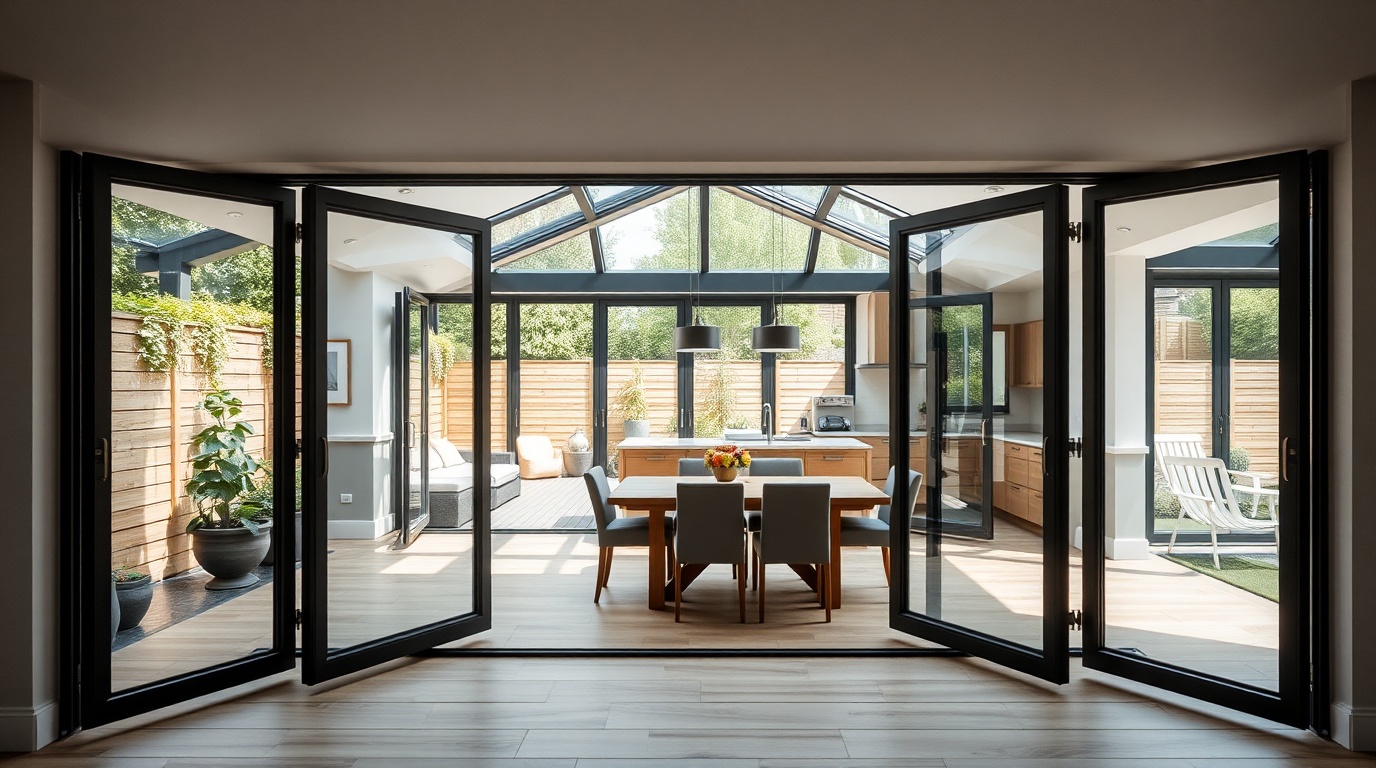
The short answer
Yes, bifold doors can be fitted in winter. Installation happens year-round in the UK, and a competent installer plans the job to keep disruption and heat loss to a minimum — the opening is only fully exposed for the part of the day when the old doors come out and the new frame goes in, and good teams work efficiently to close it back up the same day. Winter can even mean shorter lead times and better installer availability than the busy spring and summer period. The main caveats are practical: very severe weather (heavy rain, high winds, ice or snow) may delay external work or making good, some sealants and finishes cure more slowly in the cold, and the room will be cold while the opening is open. None of these prevent a well-managed winter installation.
There is no rule against fitting bifold doors in the colder months, and there are some advantages. Here is how a winter installation is managed and what to bear in mind.
Winter fitting
- Possible in winter?Yes, year-round
- Opening exposedBriefly, then closed same day
- Possible upsideShorter lead times
- Watch forSevere weather delays
- CuringSealants slower in cold
Why winter installation is perfectly possible
Replacement door and window installation is a year-round trade in the UK, and there is nothing about a bifold door that rules out a winter fit. The job follows the same sequence whatever the season: remove the old doors, prepare the opening, fit and level the new frame, hang and adjust the panels, then seal and make good. A competent team manages the work so the opening is only fully open for a limited part of the day — typically while the old unit comes out and the new frame goes in — and aims to have it weathertight again the same day. The exposure is brief and controlled, not a wall left open for days.
There can even be genuine advantages to booking in winter. Demand for door and window work tends to peak in spring and summer as people prepare for the warmer months, so winter can bring shorter manufacturing lead times and easier installer availability. If you have decided on bifolds and want them in before the next garden season, a winter installation gets the disruptive work done in the quieter months. So the honest answer to whether you can fit bifolds in winter is a straightforward yes — it is normal, planned-for work, not a compromise.
How installers limit heat loss and disruption
A good installer takes deliberate steps to keep a winter fit comfortable and efficient:
- Efficient sequencing: the old doors are removed and the new frame fitted in a continuous push, minimising the time the opening stands open to the elements.
- Temporary protection: dust sheets and temporary barriers help contain cold, draughts and debris to the work area, and the rest of the home can be closed off.
- Same-day weathertightness: teams plan to have the doors in and the opening sealed before the end of the working day, so you are not left with an open hole overnight.
- Proper sealing: once fitted, the perimeter is sealed and the new doors — with their modern glazing and seals — immediately improve the room's thermal performance over older doors.
It is sensible to prepare the room: clear the working area, expect it to be cold for a few hours while the opening is open, and keep heating off in that room until the doors are in and sealed. Dressing warmly and confining family and pets to other rooms makes the day more comfortable. With these straightforward measures, the temporary disruption of a winter fit is modest and short-lived.
The genuine cold-weather caveats
While winter fitting is normal, a few weather-related factors are worth understanding so expectations are realistic:
- Severe weather may cause delays: heavy rain, high winds, snow or ice can make external work and making good unsafe or impractical on the day. A responsible installer may postpone rather than fit doors in conditions that compromise the work or safety, so some flexibility in dates helps.
- Slower curing: some sealants, adhesives and finishes cure more slowly in cold, damp conditions. Installers use products suited to the temperature, but external pointing or rendering around a new opening may need a milder window to finish properly.
- Frozen or wet ground: external groundwork, drainage or paving around a flush threshold can be harder in freezing conditions.
- Daylight hours: shorter winter days give less working light, so jobs are scheduled with that in mind.
None of these are reasons to avoid a winter installation — they are simply factors a professional accounts for. The practical advice is to use an experienced installer, keep a little flexibility in your dates for genuinely severe weather, and recognise that the brief discomfort of the fitting day is quickly forgotten once the new doors are in, sealed and performing better than the old ones through the rest of the cold season.
Choosing the right time of year for your project
If you have a free choice of when to fit bifolds, it is worth weighing the seasons rather than assuming summer is automatically best. Summer brings the obvious comforts — milder weather, longer working days, and a room that stays warm while the opening is open — but it is also the busiest period for installers, which can mean longer lead times and less flexibility on dates as everyone prepares for the garden season at once.
Winter reverses the trade-off. The fitting day is colder and the room is briefly chilly while the opening is open, and severe weather can occasionally delay external work. But demand is lower, so lead times can be shorter and installer availability better, and you get the disruptive work done in the quiet months so the doors are ready to enjoy when the weather warms. Spring and autumn sit in between, often offering a reasonable balance of workable weather and availability.
For most homeowners the practical conclusion is that there is no wrong season — only different trade-offs. The factors that matter more than the time of year are using an experienced installer who manages the opening efficiently, keeping a little flexibility in your dates for genuinely severe weather, and accepting that the manufacturing lead time, not the season, usually dominates the timeline. If getting the doors in before next summer is the goal, a winter or early-spring fit is a sensible, fully workable choice, and the brief discomfort of a cold fitting day is quickly forgotten once the doors are sealed and performing.
Frequently asked questions
Is it bad to install bifold doors in winter?
No. Door installation is year-round work, and a competent installer keeps the opening exposed only briefly before sealing it the same day. Winter can even bring shorter lead times. The main caveats are possible delays in severe weather and slower curing of some sealants, both of which professionals plan around.
Will my house get cold when bifold doors are fitted in winter?
The room being worked on will be cold for the few hours the opening is open, so it is sensible to clear the space, shut off other rooms, and keep heating off there until the doors are sealed. The exposure is brief and controlled, and the new doors improve thermal performance once fitted.
Can bad weather stop bifold doors being installed?
Genuinely severe weather — heavy rain, high winds, snow or ice — can delay external work or making good, and a responsible installer may postpone rather than compromise the job or safety. Normal winter conditions are fine; it is only extreme weather that causes delays, so keeping some date flexibility helps.
Sources & further reading
Figures on this page are typical UK ranges drawn from published sources and depend on your specific opening and material. They are guidance, not a quotation.