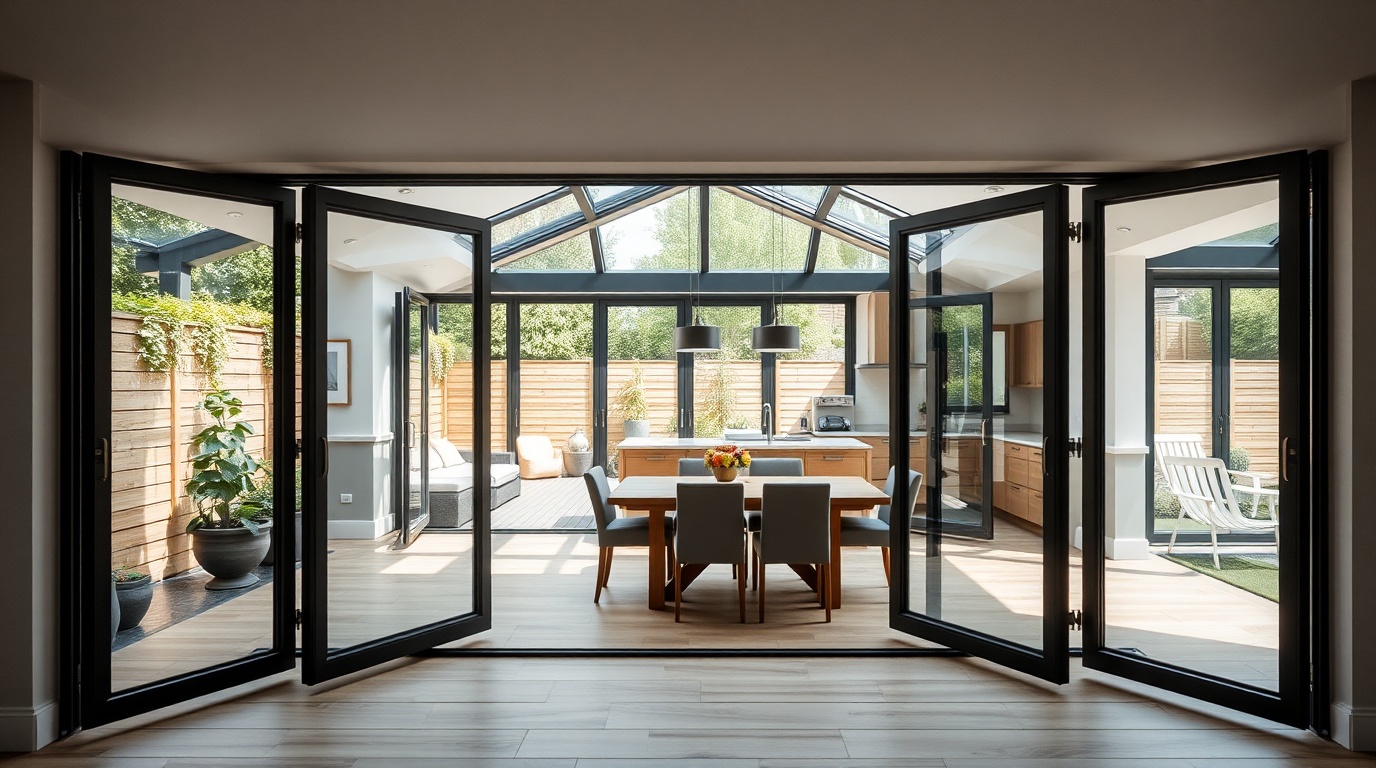
The short answer
Composite bifold doors combine two materials — most often a timber inner frame with an aluminium outer cladding — to get timber's warmth and insulation inside and aluminium's low maintenance and weather resistance outside. The aim is to avoid the main drawbacks of each pure material: timber's exposed-face maintenance and aluminium's need for a thermal break. With aluminium-clad timber, you see and feel natural wood indoors while the weather hits a durable powder-coated aluminium skin outside that never needs repainting. The wood gives good natural insulation. The trade-off is cost — composite doors are typically the most expensive bifold type — and the term is used loosely, so it is worth confirming exactly what 'composite' means with each supplier.
"Composite" is used loosely in the door trade, which causes confusion. The sections below explain what composite bifolds usually mean, how the common aluminium-clad timber type works, and how it stacks up against pure aluminium or timber.
Composite bifolds in brief
- Most common typeAluminium-clad timber
- InsideNatural timber
- OutsidePowder-coated aluminium
- MaintenanceLow (alu outer)
- CostTypically the highest
What 'composite' means here
In bifold doors, composite usually refers to a frame built from two materials working together, designed so each does what it does well. The most common form is aluminium-clad timber: a structural timber inner frame with an aluminium outer cladding bonded or clipped over the weather-facing side. Indoors you see and touch real wood; outdoors the elements meet a durable aluminium skin.
The word is used loosely, though. Some manufacturers describe other multi-material constructions as 'composite', and the term overlaps with marketing language, so it is worth asking each supplier exactly what their composite door is made of and which material faces in and out. Confirming the construction is the only reliable way to compare quotes, because the performance depends entirely on which materials are used and where.
How aluminium-clad timber works
The logic of aluminium-clad timber is to take the strengths of both materials and design out their weaknesses. Timber is a good natural insulator and looks and feels warm, but its main drawback is the upkeep of the exposed outer face, which needs regular re-coating to stay weatherproof. Aluminium is durable, weatherproof and low-maintenance, but conducts heat and must be thermally broken to insulate well.
Cladding the timber's outer face with aluminium addresses both issues at once. The weather hits the powder-coated aluminium, which sheds rain and UV and never needs repainting, so the high-maintenance exposed timber problem largely disappears. Meanwhile the timber sits behind, insulating the frame and giving a natural wood finish on the inside. You effectively get a low-maintenance exterior and a warm, attractive interior. The table compares composite with the pure materials.
| Factor | Composite (alu-clad timber) | Aluminium | Timber |
|---|---|---|---|
| Outer maintenance | Low (aluminium) | Low | Regular re-coating |
| Inside look | Natural timber | Powder-coated metal | Natural timber |
| Insulation | Good (timber core) | Good (with thermal break) | Good (natural) |
| Frame sightlines | Bulkier than aluminium | Slimmest | Bulky |
| Typical cost | Highest | High | High |
Indicative comparison for guidance; varies by manufacturer and construction.
How composite compares — and when to choose it
Against pure aluminium, composite gives a warmer, natural timber interior and good insulation from the wood core, but it cannot match aluminium's slimmest sightlines, because a timber-cored frame is bulkier than an all-aluminium one. Against pure timber, composite removes the biggest downside — exterior maintenance — by putting aluminium on the weather side, so you keep the wood look inside without the regular outdoor re-coating.
The main trade-off is cost: building a frame from two materials makes composite typically the most expensive bifold type, above both aluminium and timber alone. That makes it a considered choice rather than a default. It suits homeowners who specifically want a natural timber interior, good insulation and a long-lasting, low-maintenance exterior, and are willing to pay a premium for that combination — often on a feature opening in a quality home where both the inside finish and outdoor durability matter. If you mainly want slim modern frames, aluminium alone is better value; if budget rules, uPVC or aluminium will cost less; composite is for those who specifically value the wood-inside, metal-outside blend.
Frequently asked questions
What is a composite bifold door made of?
Most often a timber inner frame with an aluminium outer cladding — known as aluminium-clad timber. You see natural wood indoors while the weather meets a durable powder-coated aluminium skin outside. The term is used loosely, so confirm the exact construction with each supplier.
Are composite bifolds low maintenance?
The exterior is, because the weather-facing side is powder-coated aluminium that sheds rain and never needs repainting. The timber inside needs only normal indoor care. This is the main appeal — you avoid the regular outdoor re-coating that pure timber needs while keeping a wood interior.
Are composite bifold doors more expensive than aluminium?
Usually yes. Building a frame from two materials makes composite typically the most expensive bifold type, above both aluminium and timber alone. It is a considered choice for people who specifically want a timber interior with a low-maintenance aluminium exterior.
Sources & further reading
Figures on this page are typical UK ranges drawn from published sources and depend on your specific opening and material. They are guidance, not a quotation.