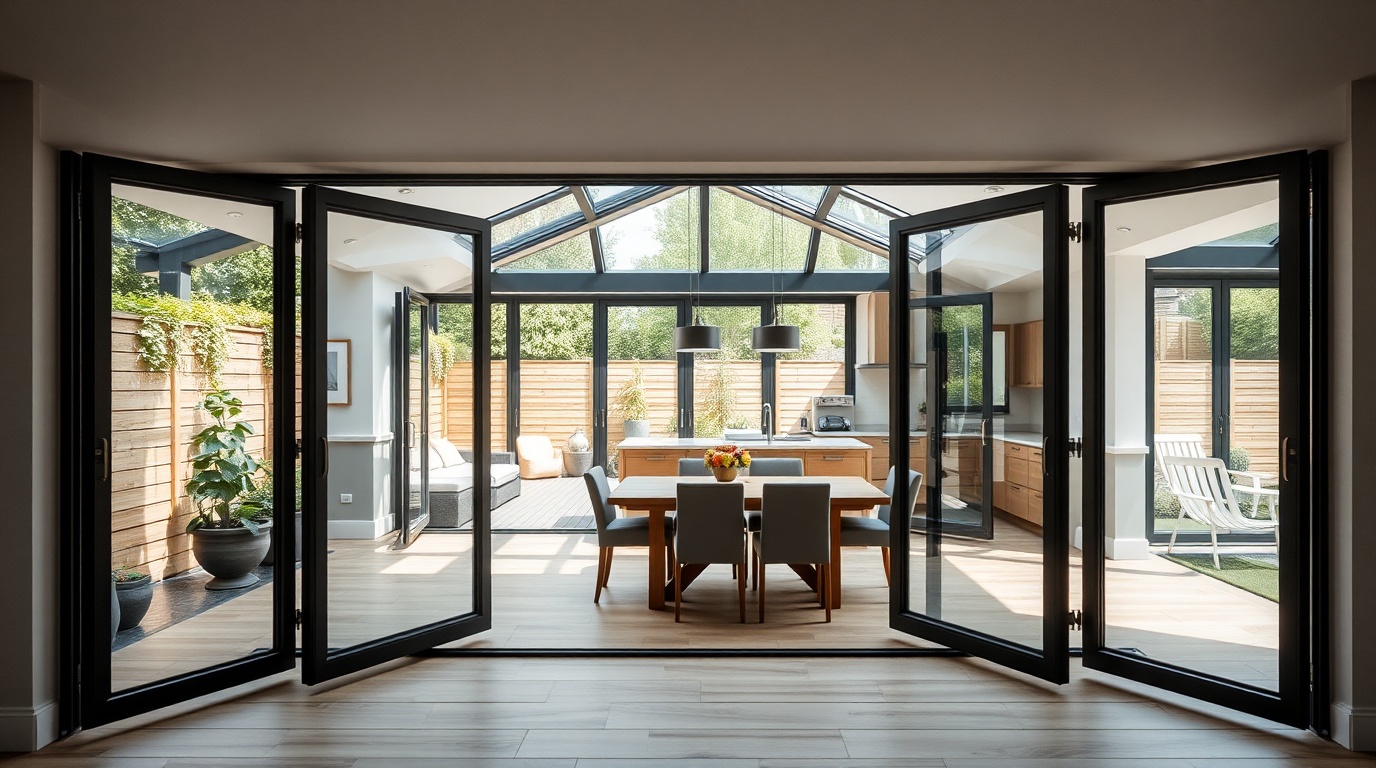
The short answer
Frameless glass bifold doors use toughened glass panels with minimal or no visible frame on the panels themselves, giving an almost uninterrupted wall of glass — but true frameless systems are mainly suited to internal use or sheltered spaces, not exposed external openings needing high insulation. The panels hang from a slim top track and fold like a standard bifold, but without the usual stiles, so the view is the cleanest of any folding door. The catch is thermal and weather performance: a frameless system is typically single-glazed and not thermally broken, so it does not meet the insulation standards expected of a heated room's external door. That makes them excellent as internal dividers, for verandas, balconies, garden rooms and shopfronts, but a poor choice as the main external door of a heated living space, where a slim-frame double-glazed aluminium bifold is the better fit.
"Frameless" sounds like the ultimate bifold, but the term hides an important limitation around glazing and insulation. The sections below explain what frameless glass bifolds really are, where they shine, and where a slim-frame aluminium door is the right choice instead.
Frameless bifolds in brief
- LookNear-uninterrupted glass
- GlazingUsually single-glazed
- Thermal breakTypically none
- SuitsInternal, verandas, garden rooms
- Not ideal forMain heated external opening
What 'frameless' actually means
A frameless glass bifold is a folding door made from toughened glass panels that have little or no visible frame on the panels themselves. The panels still hang from a slim top track and fold to one side like any bifold, but because the vertical stiles are removed or minimised, you get an almost continuous run of glass with only fine joints between panels — the cleanest view of any folding system.
The trade-off for that clean look is what is left out. To remove the frame, these systems are typically single-glazed and have no thermal break, because a sealed double-glazed unit needs a frame to hold and seal it and an insulated edge. That is the crucial point: 'frameless' is not just a style choice, it usually means a single pane of glass with minimal insulation, which determines where the door can sensibly be used. The term also gets applied loosely to very slim-frame systems, so it is worth confirming whether a 'frameless' door is genuinely single-glazed and unbroken or simply slim-framed.
Pros, cons and where they suit
Frameless glass bifolds have a clear set of strengths and weaknesses that point to specific uses.
- Pro — unmatched view: with no panel stiles, the glass is almost continuous, giving the cleanest open or closed view of any folding door.
- Pro — light and openness: maximum glazed area floods a space with daylight and feels very open.
- Pro — flexible internally: excellent as a movable glass wall that can fully open or close off a space.
- Con — poor insulation: single glazing and no thermal break mean high heat loss, so unsuitable as a heated room's main external door.
- Con — weather and security: often less weather-sealed and lower security than a fully framed, double-glazed bifold.
- Con — condensation: single glass is cold, so it can attract condensation in heated, humid spaces.
| Use | Frameless glass bifold suitability |
|---|---|
| Internal room divider | Well suited |
| Veranda / covered terrace | Well suited |
| Garden room / sunroom (unheated) | Well suited |
| Balcony enclosure | Well suited |
| Shopfront / commercial | Common use |
| Main external door of heated room | Not suitable |
Indicative guidance on where frameless glass bifolds fit; confirm with the supplier.
Frameless versus slim-frame aluminium
People considering frameless are often really after one thing — maximum glass and minimal frame — and there are two ways to get close to that. A true frameless system gives the most glass but with the single-glazing limitation above, so it belongs in internal, sheltered or unheated settings. A slim-frame aluminium bifold keeps a thin but real frame on each panel, which lets it carry a sealed double- or triple-glazed unit and a thermal break — so it gives most of the glassy, modern look while still insulating to the standard a heated living space needs.
For the main external opening of a kitchen-diner or living room — a heated space that must meet insulation standards — the slim-frame double-glazed aluminium door is almost always the right choice, because it combines a near-frameless appearance with proper thermal and weather performance. Reserve true frameless for where its strengths fit and its weaknesses do not matter: internal glass walls, verandas, garden rooms, balconies and shopfronts, where the uninterrupted view is the whole point and high insulation is not required. Understanding that distinction is the key to not buying a beautiful door that is wrong for the opening.
Frequently asked questions
Are frameless glass bifold doors well insulated?
Usually not. True frameless systems are typically single-glazed with no thermal break, because removing the frame means there is no sealed double-glazed unit or insulated edge. That gives high heat loss, so they are unsuitable as the main external door of a heated room and better kept to internal or sheltered uses.
Where are frameless glass bifolds typically used?
They suit internal room dividers, verandas, covered terraces, unheated garden rooms, balcony enclosures and shopfronts — places where an uninterrupted glass view matters and high insulation is not required. For a heated living space's main external opening, a slim-frame double-glazed aluminium bifold is better.
What's the difference between frameless and slim-frame bifolds?
Frameless removes the panel frames for the cleanest glass view but is typically single-glazed and uninsulated. Slim-frame aluminium keeps a thin frame on each panel, which lets it hold a sealed double- or triple-glazed unit with a thermal break, so it looks nearly frameless while still insulating to the standard a heated room needs.
Sources & further reading
- HomeOwners Alliance — bifold doors guide
- gov.uk — Building Regulations Approved Document L (conservation of fuel and power)
Figures on this page are typical UK ranges drawn from published sources and depend on your specific opening and material. They are guidance, not a quotation.