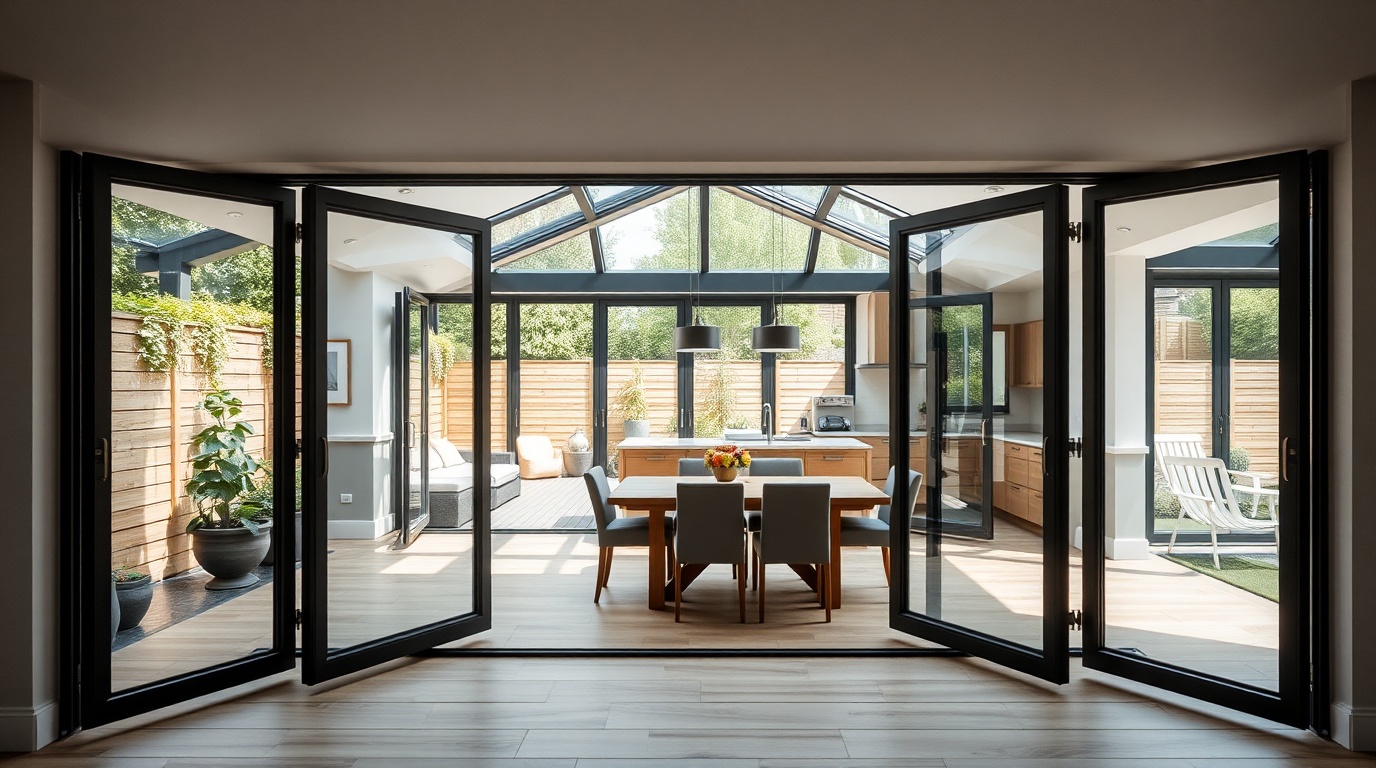
The short answer
A single bifold panel is usually a maximum of around 1 metre wide, and most systems run up to six or seven panels, so an overall span of roughly 6 to 7 metres is achievable for a wide aluminium bifold. Each panel typically measures between 0.5 and 1 metre, and the system's maximum panel weight and height also limit how big each one can be. Taller panels must be narrower to stay within weight limits, and the structural opening must be supported by an adequately sized lintel or beam. For very wide openings, designers sometimes combine bifolds with fixed glazing rather than pushing a single run to its limit.
Bifold width is governed by panel width limits, the number of panels a system allows and the structural support above the opening.
Quick reference
- Max panel width~1.0m typical
- Max panelsUp to 6-7
- Typical max span6–7m
- Limit set byPanel weight, height & lintel
What limits bifold width
Several factors decide how wide a bifold can go. The table summarises the main limits and how they interact. The overall span is the product of how wide each panel can be and how many panels the system supports, capped by what the structure above can carry.
Panel width is limited by weight, since a very wide panel holds more glass and strains the hinges and rollers. Panel count is limited by the system's design and by how much stacking space you have when the doors fold back. The structural opening sets an outer limit, because a wider span needs a larger, engineer-designed beam.
| Limit | Typical value | Why it matters |
|---|---|---|
| Panel width | Up to ~1.0m | Wider panels are heavier and sag |
| Panel weight | System-dependent | Hinges and rollers have load limits |
| Panel height | Up to ~2.4m+ | Taller panels must be narrower |
| Overall span | ~6–7m | Combine with fixed glazing beyond this |
Indicative figures for guidance; check the specific system's data sheet.
Panel width and height trade-off
Panel size is a balance of width, height and weight. A bifold panel that is both very wide and very tall becomes too heavy for the running gear and is prone to sagging over time, which causes dragging and seal problems. So:
- Taller doors usually need narrower panels to stay within weight limits.
- Slim aluminium frames allow larger glass than bulkier uPVC at the same weight.
- Glass thickness for safety and thermal performance adds weight, reducing the maximum panel size.
- Quality running gear rated for higher loads supports bigger panels.
This is why a tall extension bifold may use more, narrower panels than a standard-height door of the same width. The manufacturer's data sheet sets the maximum panel dimensions and weight for the system, and the surveyor works within those limits to design a door that folds smoothly for years.
Going wider than a single run
Where an opening exceeds what a single bifold run can comfortably cover, there are practical options. A common approach is to combine a bifold with a fixed glazed panel or a corner post, keeping the moving section within sensible limits while still glazing the whole wall. Some projects use two separate bifold runs meeting at a corner without a post, creating an open corner that folds away entirely.
Whatever the configuration, the structural opening must be supported by a correctly specified lintel or steel beam, designed by an engineer, so the wider you go the more important the structural design becomes. For very large glazed walls, mixing a bifold with fixed glazing above or alongside can deliver the look and the light without overloading the moving panels, and often costs less than pushing a single run to its absolute maximum.
Practical considerations for wide bifolds
Beyond the technical maximum, a few practical points shape how wide you should actually go. The folded panels need somewhere to stack, so a very wide run requires clear space at the jamb where the leaves rest. Heavier panels need more effort to fold and unfold, and quality hardware matters more as the doors get bigger to keep operation smooth.
Wider runs also mean more glass to clean and more seals to maintain, and the larger glazed area affects heat loss and summer overheating, so glazing specification becomes more important. For most homes, a sensible wide bifold sits comfortably within the 3 to 5 metre range across four to six panels. If your opening is genuinely large, discuss with the supplier whether a single run, a run plus fixed glazing, or a corner configuration gives the right balance of cost, operation and appearance for the space.
It also helps to think about how often the full width will actually be opened. A very wide run that folds entirely clear is impressive, but if the doors are mostly used through a single traffic door for everyday access, a slightly narrower moving section combined with a fixed glazed panel can give almost the same view for less weight and cost. The widest configuration is not always the most practical one to live with, since heavier runs take more effort to fold and need more stacking space at the jamb. Matching the width and configuration to how you will use the opening day to day, rather than simply reaching for the maximum the system allows, usually gives a door that both looks right and operates smoothly for years. The surveyor can model a few options against your opening so you can weigh the wide-open feel against the everyday handling before committing.
Frequently asked questions
What is the widest a single bifold door can be?
Most systems reach around 6 to 7 metres across up to six or seven panels, with each panel up to about 1 metre. Beyond that, designers usually combine bifolds with fixed glazing.
Can bifold panels be made taller than 2.4 metres?
Some systems allow taller panels, but height increases weight, so very tall panels must be kept narrower. Always check the specific system's maximum panel dimensions and weight.
Do wider bifolds need a bigger lintel?
Yes. A wider opening carries more load from the wall above, so it needs a larger, engineer-designed lintel or steel beam. This structural work is a key part of any wide bifold project.
Is there a maximum number of panels?
Most systems run up to six or seven panels. Beyond that the run becomes heavy to operate and needs a lot of stacking space, so very wide openings often use fixed glazing alongside a bifold instead.
Where do the panels go when a wide bifold is open?
They fold and stack against one or both jambs. A wide run needs clear space at the side for the folded leaves, so plan the stacking position when designing the door.
Sources & further reading
- HomeOwners Alliance — bifold doors guide
- gov.uk — Approved Document A (structure)
- Checkatrade — bifold door cost guide
Figures on this page are typical UK ranges drawn from published sources and depend on your specific opening and material. They are guidance, not a quotation.