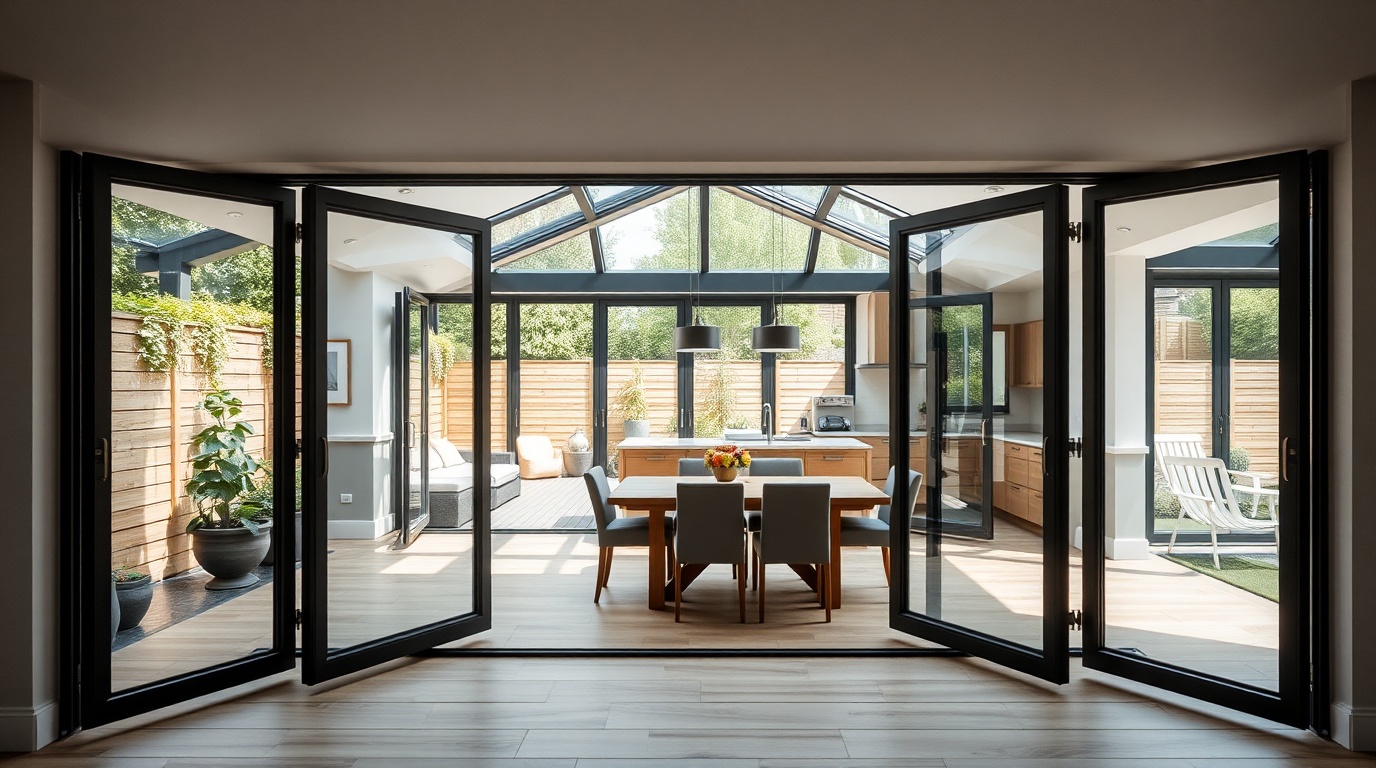
The short answer
Internal bifold doors in the UK typically cost from around £150 to £600 per door leaf supply-only, with complete glazed or timber room-divider sets running from roughly £500 to £2,500. Fitting an internal bifold usually adds £150 to £400 in labour per opening. Internal bifolds are far cheaper than external ones because they need no weatherproofing, thermal glazing or heavy multipoint locking. Cost depends mainly on the material and finish: budget primed or veneered panels sit at the bottom, while oak, walnut or large glazed crittall-style dividers sit at the top. Track quality and the number of leaves also affect the figure, as does whether the doors come primed or pre-finished.
Internal bifolds divide rooms rather than seal the outside, so they cost a fraction of external sets and span a wide range by material.
Quick reference
- Per leaf (supply-only)£150–£600
- Complete set (3-4 leaf)£500–£2,500
- Fitting per opening£150–£400
- Glazed crittall-style divider£900–£3,000+
Internal bifold price ranges
Internal bifold doors are priced by material, glazing and the number of leaves. The figures below are indicative UK ranges for 2026 covering the door set only, before fitting. Pre-finished doors cost more than primed ones, but save the time and cost of painting on site.
A budget white or primed set for a modest opening sits at the lower end, while a large oak or glazed divider spanning a wide reception room reaches the top. Glazed crittall-style dividers, with slim black frames and large panes, have become popular for separating kitchen and dining areas and command a premium for the look and the glass involved.
| Type | Material | Supply-only set | Notes |
|---|---|---|---|
| Budget panel | Primed / white | £500–£1,000 | Solid or hollow core |
| Veneered | Oak / walnut veneer | £700–£1,500 | Pre-finished options |
| Solid timber | Oak / hardwood | £1,200–£2,500 | Heavier, premium feel |
| Glazed divider | Crittall-style / glass | £900–£3,000+ | Slim frames, large glass |
Indicative UK figures for guidance; finish and leaf count drive the range.
Why internal bifolds cost less than external
External bifold doors carry the full weight of weather, security and thermal performance, which is why they cost several times more. An internal bifold has none of that burden, so the price reflects the door material, the track and the ironmongery only. Key cost drivers for internal sets are:
- Material: hollow-core primed panels sit at the lower end; solid oak and walnut sit at the top.
- Glazing: glazed and crittall-style dividers cost more than solid panels but create light flow between rooms.
- Track system: top-hung sliding-folding gear with quality rollers runs smoother and costs more than basic hardware.
- Number of leaves: a wide opening needs more leaves and a longer track.
Because there is no Building Regulations glazing requirement for most internal doors and no weather seals to detail, the overall job is simpler and the materials lighter, which keeps both the door price and the fitting cost down compared with an external set.
Fitting and finishing
Internal bifold fitting is simpler than external work because there is no structural opening or weatherproofing involved. A carpenter typically charges £150 to £400 per opening to hang the doors, fit the track and adjust the leaves. If you buy primed doors you will also need to factor in painting, either as a DIY job or an added cost for a decorator.
Larger glazed dividers may need two people to handle safely, which can nudge labour up, and a heavy solid timber set needs a robust top track correctly fixed to a sound lintel or header. The floor guide keeps the leaves aligned without a full bottom track, so the floor stays clear and easy to clean. For a tidy result, the opening should be square and the header level, otherwise the doors can bind or fail to fold smoothly.
Choosing internal bifolds for the look and budget
The right internal bifold balances the look you want against the budget. Solid panel sets give privacy and a traditional feel, while glazed dividers borrow light between rooms and make a space feel larger and more open. Crittall-style steel-look dividers suit contemporary interiors but cost more, both for the frames and the larger glass panes. Oak and walnut bring warmth and a premium finish at a higher price than primed or veneered options.
Practical points also affect cost and satisfaction. Consider how often the doors will be folded back, since a smooth, quality track matters more for daily use. Think about whether you want the doors to stack to one side or split, and whether a clear or obscure glass suits the rooms involved. Buying pre-finished doors avoids painting but costs more upfront. For a one-off opening, a stock kit can work; for a wide or unusual opening, a made-to-measure set gives a better fit at a higher price.
When you set the door budget against the whole project, a few smaller costs are easy to miss. Primed doors need painting, which is either your time or a decorator's fee, and a quality top track with smooth rollers is worth paying for where the doors will be folded back daily rather than left open. Architraves, a new floor guide and any trimming of the leaves to suit an out-of-square opening all add a little to the total. Glazed and crittall-style dividers also carry the cost of safety glass where panes sit at low level. None of these are large on their own, but together they explain why a finished internal bifold can cost noticeably more than the headline price of the door set. Pricing the doors, the finish and the fitting as separate lines gives the clearest view of what a tidy, well-operating internal divider will actually cost.
Frequently asked questions
Are internal bifold doors cheaper than sliding doors?
Internal bifolds and sliding room dividers overlap in price. Simple panel bifolds can be a lower-cost option, while large glazed sliding dividers may cost more. The material and glazing matter more than the mechanism.
Can I fit internal bifold doors myself?
A competent DIYer can fit lightweight internal bifolds, as the track is top-hung and there is no structural work. Heavy solid timber or large glazed sets are easier and safer with a carpenter.
Do internal bifold doors need a track top and bottom?
Most internal bifolds run on a top track with the floor guide keeping the leaves aligned, rather than a full bottom track. This keeps the floor area clear and is easier to clean.
How many leaves do I need for an internal opening?
It depends on the width and the leaf size. A typical opening that would take a pair of doors suits a three or four-leaf bifold; wider openings need more leaves and a longer track.
Do internal bifolds need safety glass?
Glazed internal doors should use safety glass where glazing is at low level or in a door, in line with the safety glazing requirements of Building Regulations. A supplier can specify toughened or laminated glass to suit.
Sources & further reading
- Checkatrade — internal door cost guide
- MyJobQuote — internal door fitting costs
- HomeOwners Alliance — home improvement advice
Figures on this page are typical UK ranges drawn from published sources and depend on your specific opening and material. They are guidance, not a quotation.